(Reuters) – A Chinese doctor reprimanded for warning
against a “SARS-like” coronavirus before it was officially
recognised died of the illness on Friday, triggering online
expressions of anger at the government and fuelling
suspicions of censorship.
The death of Li Wenliang, 34, came as Chinese President Xi
Jinping told the United States that China was doing all it
could to contain the virus after earlier assuring the World
Health Organization (WHO) of full openness and
transparency.
The death toll in mainland China reached 637 on Friday,with a total of 31,211 cases, WHO chief Tedros Adhanom Ghebreyesus said in Geneva, warning of a worldwide
shortage of gowns, masks and other protective equipment.
“For the last two days there had been fewer reported
infections in China, which is good news, but we caution
against reading too much into that,” he told the WHO
Executive Board.
“The numbers could go up again.”
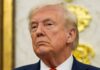
U.S. President Donald Trump, after speaking to Xi by phone,
said China was showing “great discipline” in tackling the
virus.
“Nothing is easy, but he will be successful, especially as the
weather starts to warm & the virus hopefully becomes
weaker, and then gone,” Trump said on Twitter. “…We are
working closely with China to help!”
Ophthalmologist Li was among eight people reprimanded by
police in the city of Wuhan, the epicentre of the flu-like
contagion in central Hubei province, for spreading “illegal
and false” information.
Li’s social media warnings of a new “SARS-like”
coronavirus – a reference to Severe Acute Respiratory
Syndrome, which killed almost 800 people around the world
in 2002-2003 after originating in China – angered police.
China was accused of trying to cover up SARS.
Li was forced to sign a letter on Jan. 3, saying he had
“severely disrupted social order” and was threatened with
charges.
A selfie of him lying on a hospital bed this week wearing an
oxygen respirator and holding up his Chinese identification
card was shared widely online.
“We deeply mourn the death of Wuhan doctor Li Wenliang
… After all-effort rescue, Li passed away,” the ruling
Communist Party’s People’s Daily said on Twitter.
Social media users called Li a hero, accusing authorities of
incompetence.
“Wuhan indeed owes Li Wenliang an apology,” Hu Xijin,
editor of the government-backed Global Times tabloid, said
on social media. “Wuhan and Hubei officials also owe a
solemn apology to the people of Hubei and this country.”
Li’s death was a “tragic reminder” of how China’s
preoccupation with maintaining stability drives it to suppress
vital information, Nicholas Bequelin, Southeast Asia regional
director for Amnesty International said.
“China must learn the lesson from Li’s case and adopt a
rights-respecting approach to combating the epidemic,” he
said.
BATS TO HUMANS?
Some media described Li as a hero “willing to speak the
truth” but there were signs that discussion of his death was
being censored.
The topics “the Wuhan government owes doctor Li Wenliangan apology” and “we want free speech” briefly trended on Weibo late on Thursday, but yielded no search results on
Friday.
The virus has spread around the world, with 320 cases in 27
countries and regions outside mainland China, a Reuters tally
of official statements shows.
Mike Ryan, WHO’s top emergency expert, told the
Executive Board in Geneva he was worried about stigma
being attached to the virus amid reports of Asians being
shunned in the West.
“The unnecessary, unhelpful profiling of individuals based
on ethnicity is utterly and completely unacceptable and it
needs to stop,” he said.
The outbreak could have spread from bats to humans through
the illegal traffic of pangolins, the world’s only scaly
mammals, Chinese researchers said, sparking some
scepticism.
“This is not scientific evidence,” said James Wood, head of
the University of Cambridge’s veterinary medicine
department.
Two deaths have been reported outside mainland China, in
Hong Kong and the Philippines, but how deadly and
contagious the virus is remains unclear, prompting countries
to quarantine hundreds of people and cut travel links with
China.
There were 41 new cases among about 3,700 people
quarantined in a cruise ship moored off Japan, taking the
total on board to 61.
Chinese-ruled Hong Kong quarantined for a third day a
cruise ship with 3,600 on board after three people who had
been on the vessel proved infected.
Singapore reported three more coronavirus cases not linked
to previous infections or travel to China, prompting it to raise
its alert to orange, the level reached during the SARS
outbreak in 2003.
China has sealed off cities, cancelled flights and closed
factories, cutting supply lines to global businesses, so that
Beijing resembles a ghost town.
Virus concerns swiped world markets on Friday but failed to
stand in the way of the best week for stocks since June and
the strongest for the dollar since August.
As Trump praised China’s discipline, the head of the Beijing
Municipal Bureau of Justice, Li Fuying, told reporters that
people deliberately concealing contacts or refusing to go into
isolation could be punished with death.